Quick Answer
Perforated brass mesh sheets and panels are metal sheets made from a copper–zinc alloy that are mechanically punched to create precise hole patterns. They combine excellent strength, ductility, corrosion resistance, and a natural golden appearance, making them widely used in architectural decoration, filtration systems, screening applications, ventilation panels, and decorative metal panels.
Brass mesh products are available in multiple forms such as woven brass mesh, perforated brass sheets, expanded brass mesh panels, and laser cut brass panels, each designed for different industrial and architectural applications.
Key Takeaways
- Brass mesh is made from copper–zinc alloy, offering higher strength than pure copper.
- Perforated brass mesh sheets provide excellent ductility and wear resistance.
- Brass mesh products include woven mesh, perforated sheets, expanded mesh, and laser cut panels.
- The natural golden color of brass makes it ideal for architectural and decorative design.
- Brass mesh panels are widely used in filtration, ventilation, screening, and decorative applications.
What Is Perforated Brass Mesh?
Perforated brass mesh sheets and panels are manufactured from brass alloy composed primarily of copper and zinc. Compared with pure copper, brass provides greater hardness, tensile strength, and wear resistance, while still maintaining good ductility.
During production, metal sheets are processed using precision punching machines to create uniform hole patterns such as:
- round holes
- square holes
- slotted holes
- decorative perforations
Because of its excellent mechanical properties and attractive appearance, brass mesh sheets are widely used in industrial filtration systems, architectural decoration, ventilation panels, and screening applications.
Types of Brass Mesh Products
Brass mesh sheets are available in several product forms, each suitable for different applications.
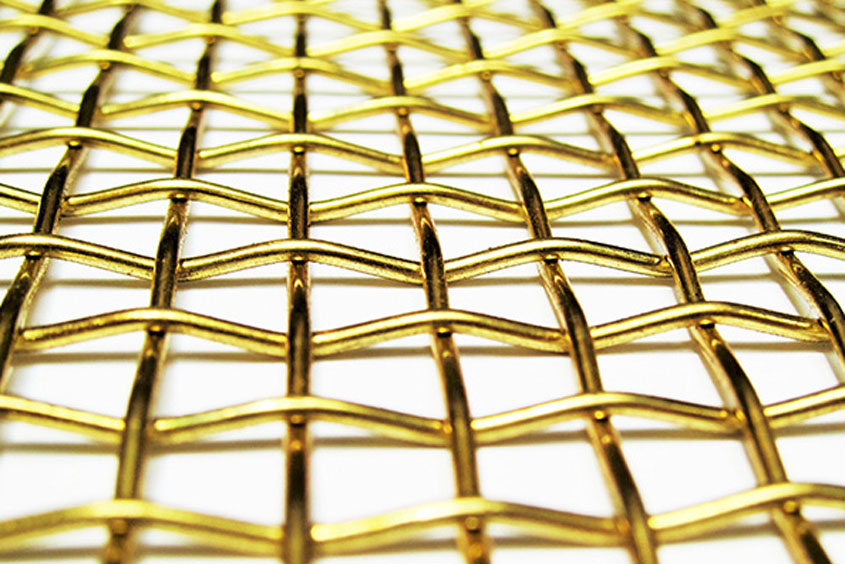
Woven Brass Mesh
Woven brass mesh is produced by weaving brass wires into mesh structures using industrial weaving machines.
Typical applications include:
- filtration systems
- screening and sieving
- window screens
- electromagnetic shielding
- decorative metal mesh
Woven brass mesh provides precise mesh openings and excellent flexibility, making it ideal for filtration and screening.
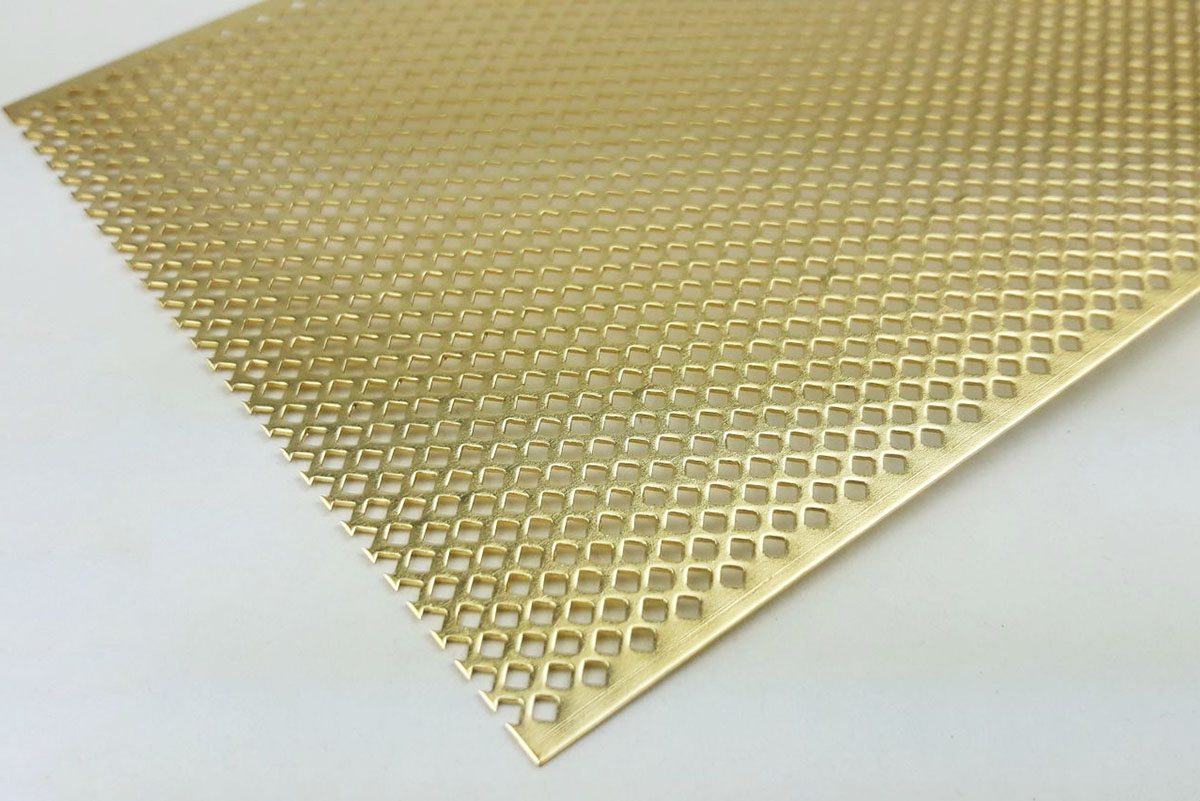
Perforated Brass Sheet
Perforated brass sheets are produced using mechanical punching equipment to create evenly spaced holes.
Common hole patterns include:
- round holes
- square holes
- slotted holes
- decorative perforations
Applications include:
- filtration screens
- ventilation panels
- speaker grilles
- architectural decoration
- lighting covers
Expanded Brass Mesh Panels
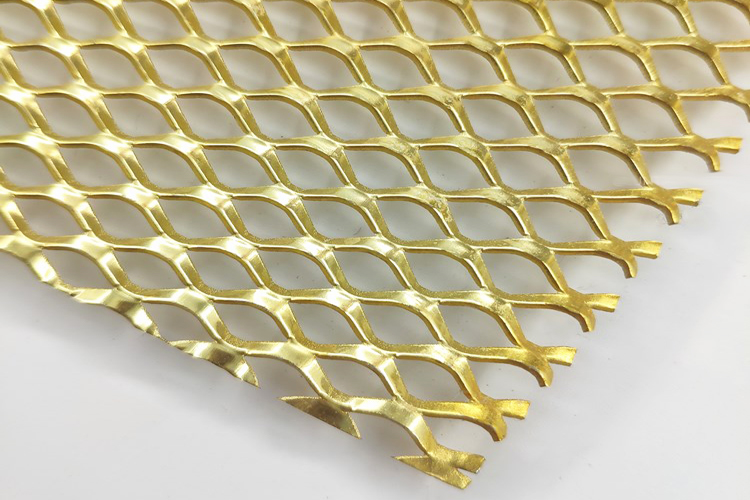
Expanded brass mesh panels are created by slitting and stretching brass sheets to form diamond-shaped openings.
Unlike perforated sheets, expanded mesh keeps the structural integrity of the original metal sheet while forming an open mesh structure.
Applications include:
- decorative partitions
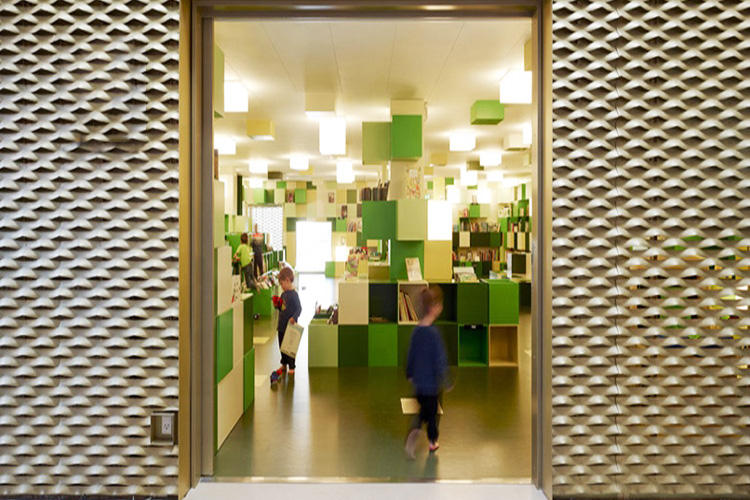
- architectural wall panels
- interior design screens
- building facade decoration
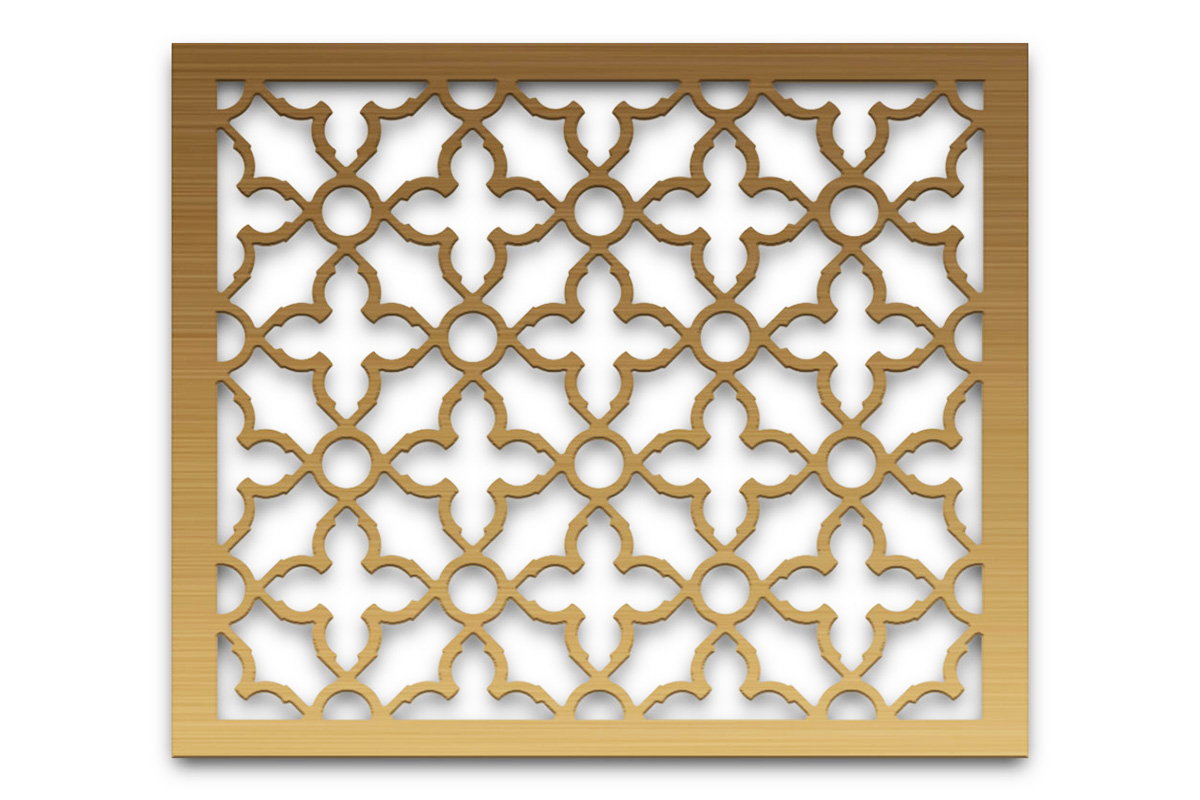
Laser Cut Brass Sheets
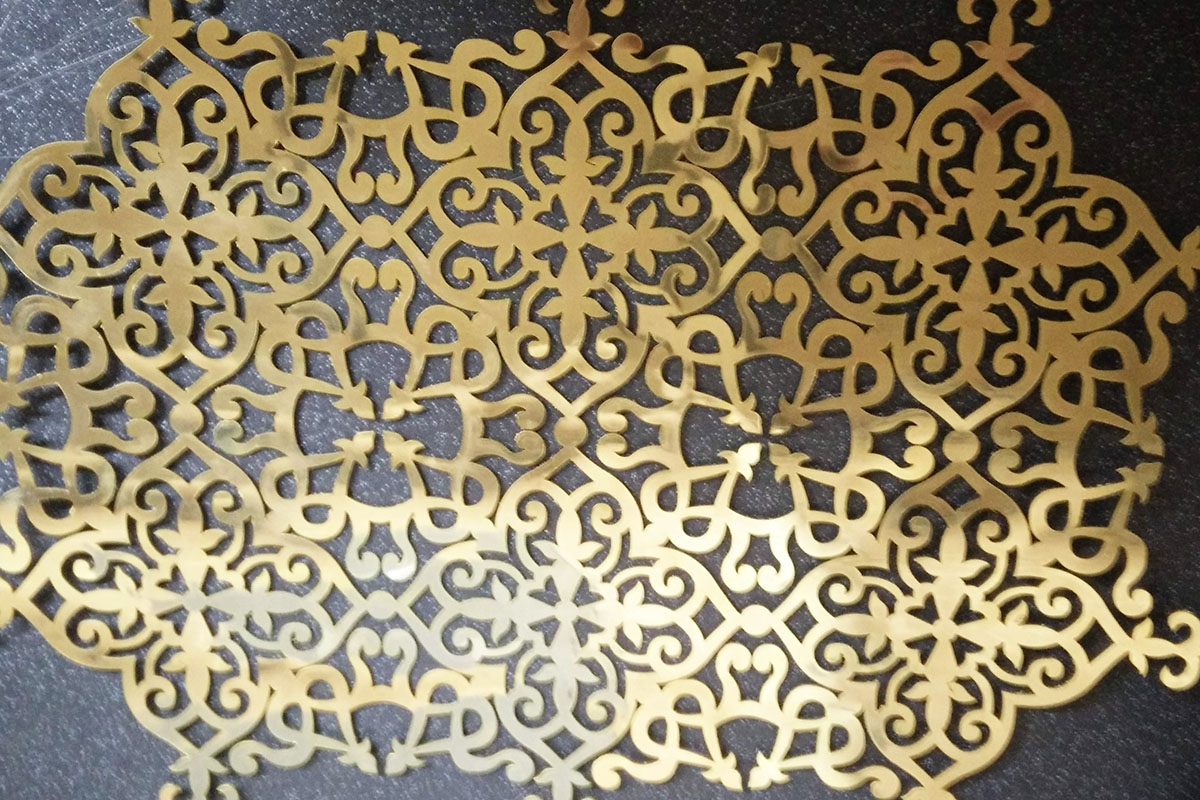
Laser cutting technology enables the production of highly precise and complex brass patterns.
Advantages include:
- precise cutting accuracy
- customizable patterns
- smooth cutting edges
- complex decorative designs
Laser cut brass panels are widely used in:
- luxury interior decoration
- decorative wall panels
- hotel design projects
- custom furniture panels
Advantages of Brass Mesh Panels
High Strength and Durability
Brass mesh panels offer better strength and wear resistance compared with pure copper mesh.
Excellent Ductility
Brass materials can be easily processed into woven mesh, perforated sheets, expanded mesh panels, and laser cut decorative panels.
Corrosion Resistance
Brass provides good resistance to corrosion in indoor environments and moderate outdoor conditions.
Elegant Golden Appearance
The natural golden color of brass gives brass mesh panels a premium decorative effect, making them popular in architectural projects.
Electrical Conductivity
Brass mesh is also suitable for electromagnetic shielding applications.
People Also Ask
What is brass mesh used for?
Brass mesh is commonly used for filtration, screening, electromagnetic shielding, ventilation panels, and architectural decoration.
Is brass mesh stronger than copper mesh?
Yes. Brass contains zinc, which increases hardness and tensile strength, making brass mesh stronger and more wear-resistant than pure copper mesh.
Can brass mesh be used for decorative architecture?
Yes. Brass mesh panels are widely used in architectural design because of their golden appearance and excellent workability.
Can brass mesh sheets be customized?
Yes. Brass mesh sheets can be customized in terms of hole size, pattern design, sheet thickness, and panel dimensions.
FAQ
What materials are used to produce brass mesh sheets?
Brass mesh sheets are made from copper–zinc alloy. The zinc improves hardness, tensile strength, and wear resistance.
What hole patterns are available for perforated brass sheets?
Common perforation patterns include round holes, square holes, slotted holes, and decorative patterns.
Is brass mesh suitable for outdoor use?
Brass mesh can be used outdoors in moderate environments, but protective coatings may be required for long-term exposure.
Can brass mesh panels be customized?
Yes. Manufacturers can customize brass mesh panels based on project requirements, including hole size, sheet thickness, and panel dimensions.
What industries commonly use brass mesh panels?
Industries include architecture, industrial filtration, electronics, furniture manufacturing, and decorative metal fabrication.